I love teaching Tadasana, also known as ‘Mountain Pose’. It’s so many things. Dynamic. Balancing. Grounding. Definitely meditative. Sometimes challenging. It connects us to our breath and brings awareness to our posture. It’s the starting point for every step we take, on or off the yoga mat.
It’s also a vital tool in our ability to explore and recalibrate our sense of balance as we age. And, controversially perhaps, it’s a regular feature in my classes, despite my ‘breathe, yin, flow, restore’ strapline perhaps suggesting we’re a little nearer the mat.
Having a wobble…
Advancing years bring many ‘delights’, most notably the silently incremental loss of balance.
One minute we’re off to the gym in our high-cut leotard and leg warmers, balancing on one leg without a care, wondering what all these ‘old people’ are dithering on about. In the blink of an eye, it’s us doing the dithering, reaching for the wall, tripping over our own feet, wondering where it all went.
But it’s not just age that makes us wobble. Some years ago, following my teacher through a few rounds of sun salutations, I keeled over in forward fold, unable to lift my head from the mat for a good two hours without the room spinning. All thanks to an ear infection the previous week. Lose the ability to stand upright unaided for even the shortest time and you quickly realise how challenging it can be.
Not just for oldies
Tadasana works with our balance, posture and coordination. Age UK advises that the over-65s exercise to improve all three, and NICE guidelines focus primarily on this demographic for balance training. But we should be doing this stuff much earlier in life, not waiting till we’re of a certain age and fearful of falling.
A 2016 study tested 775 adults aged 30 to 90+ on physical performance measures including balance, gait speed, aerobic endurance and the ability to repeatedly stand and sit. The authors suggested that while physical decline in function and activity were ‘much greater during late adulthood than during the younger years’, their results ‘lent further support for interventions in younger cohorts, targeting the risk factors for late-life disability earlier in the life span in an effort to prevent, attenuate or delay functional decline’.
The NHS offers various exercises to improve balance, including standing on one leg with hands against a wall or chair — a great place to start for reassurance, but we might not always have those props close at hand as we go about our day, so building confidence is important.
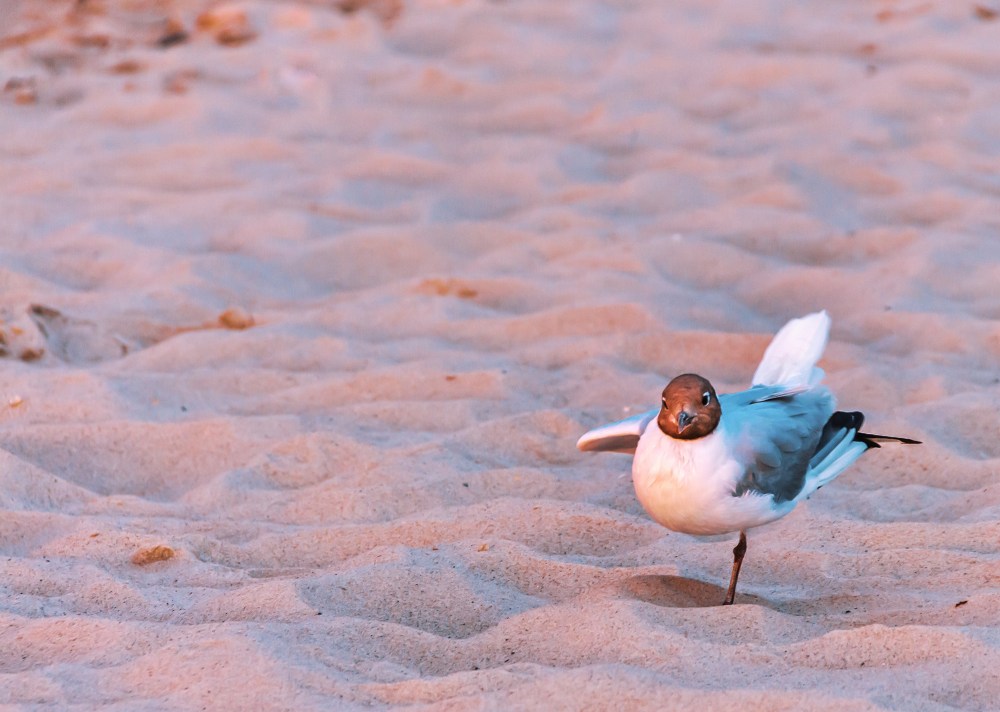
One foot at a time
Of course, there are many contributory factors to falls in older people, some clinical, some due to physical, mental and neurological decline. But often it’s simply the failure to think about how we place one foot in front of another — a problem definitely not confined to the over-65s!
When we walk, we’re effectively balancing on one leg at a time, our momentum (hopefully, but not always) helping us stay upright. Through exploring how we stand on two feet — learning how our body connects with the ground, tuning in to the steady stream of proprioceptive messages between body and brain — we can be better prepared for shifting weight from one foot to the other. Maybe even standing on one leg for slightly longer.
In fact, how long we can stand on one leg is a recognised indicator of brain health. A Japanese study suggested that ‘struggling to stand on one leg for less than 20 seconds was linked to an increased risk for stroke, small blood vessel damage in the brain, and reduced cognitive function in otherwise healthy people’.
No evidence appears to exist that if you practise standing on one leg for longer, your risk of stroke diminishes, but that shouldn’t stop us seeking to improve our posture, coordination and balance — and giving ourselves the best chance we have of staying fall-free.
And the good news is that if you work on your balance — ear infections and clinical issues aside — you CAN improve it. I know this from experience.
Using the breath to build our posture
In Tadasana, we might be standing as still as a mountain, but our body is still moving with our breath. And tuning into that gentle wave of movement as it ebbs and flows helps us find an open, upright, balanced posture. Which, in turn, offers our body the opportunity to breathe more easily!
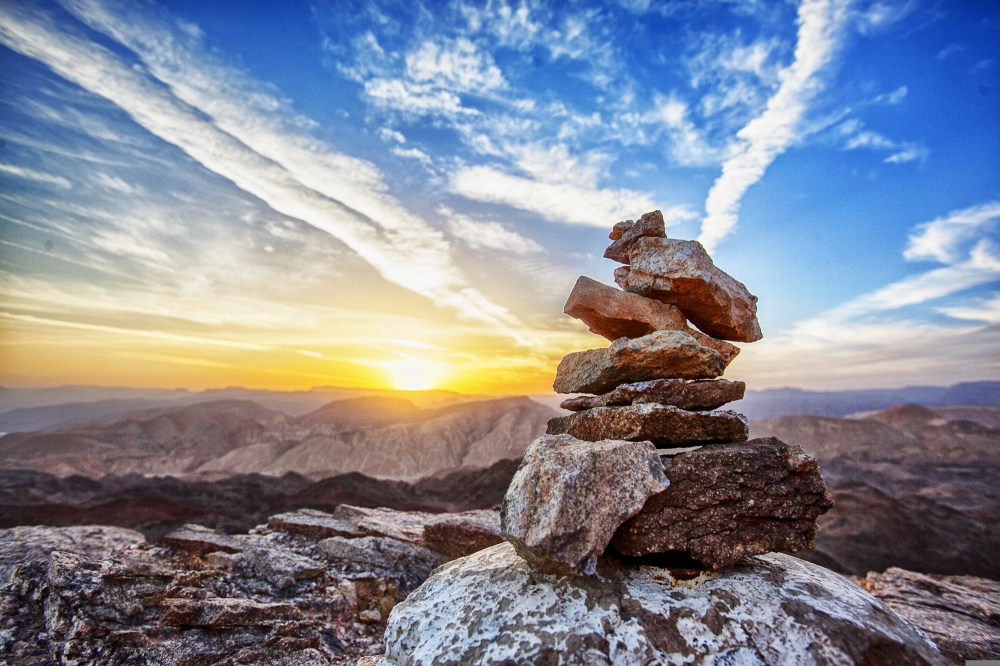
This practice is all about finding a gentle, more meditative Tadasana rather than the preliminary to the stronger Warrior postures.
1. Begin by standing with your feet hip-width apart, toes roughly pointing forward. The important thing here is to find comfort, a sense that your body is supported by your legs, with hips above ankles.
2. Close your eyes if this feels comfortable, or lower your gaze but keep the crown of the head lifted.
3. Become aware of how your feet meet the ground. Really feel the ground beneath you. In your imagination, take a little journey round the soles of the feet, starting with the big toes. Give them a wriggle, feel how they connect to the ground. Now take that imagination to each toe in turn, working from the centre out to the little toes. How do they connect to the ground? Travel down to the heels: how do the heels connect? Now glide along the inner arches back to the big toes. Imagine all four corners of the feet connected.
4. Take a couple of deeper breaths in through the nose, and out through the nose. Imagine you’re drawing that breath all the way up from the ground, to the top of your head. As you breathe out, send that breath down through the body back to the feet, like an internal sigh. Feel the weight of the body releasing a little more into the ground with each out breath.
5. Now we’ll start to ‘build’ our Tadasana from the ground up. Using your hands to guide the movement if this feels natural, imagine you can draw your breath in through the soles of the feet and incrementally up the body, lengthening the crown a little more towards the sky with each in breath. Spend perhaps three breaths on each section, really tuning in to how your body feels.
- Begin by drawing the breath up to your knees… then gently release it back down.
- Now draw the breath a little further, up towards the belly button… then out and down.
- Now past the belly button, to your heart centre… then out and down.
- Now up to the soft space between the collarbones… imagine that breath spilling out across the collarbones to the shoulders… flowing softly down the arms with the out breath.
- Finally, drawing the breath all the way up to the crown of your head… then out and down to the feet.
6. Now allow your arms to rest comfortably by your sides, crown of the head towards the sky, heart open, shoulders softly melted away from the ears. Take a few breaths here, enjoying your ‘gentle’ Tadasana. Allowing the movement of your breath to ebb and flow softly through you. Finding movement in stillness.
And smile.
 YogaJoodleDo