I’m a huge believer in harnessing really simple movements and techniques to regain lost mobility, restore balance (both physically and emotionally), and generally just ‘feel better’— purposefully using our breath to guide those movements, to ground ourselves as we balance and to calm our nervous system.
Which is all very well, when we’re gathered together in class and I’m leading you through it, breath by breath, wobble by wobble. So what if I said there’s one tricksy takeaway you can do any time, anywhere, to help reset yourself when you’re wobbling (literally or metaphorically)?
The ‘physiological sigh’ is a technique I’ve been using recently to settle myself in to the start of my own practice. It’s a great way of detaching from the busyness of life and becoming more present in the here and now. And it couldn’t be more simple.
Cutting to the chase, what is it?
- Begin by taking a long, deep breath in through your nose.
- Without exhaling, take another sip of breath, filling your lungs to the max.
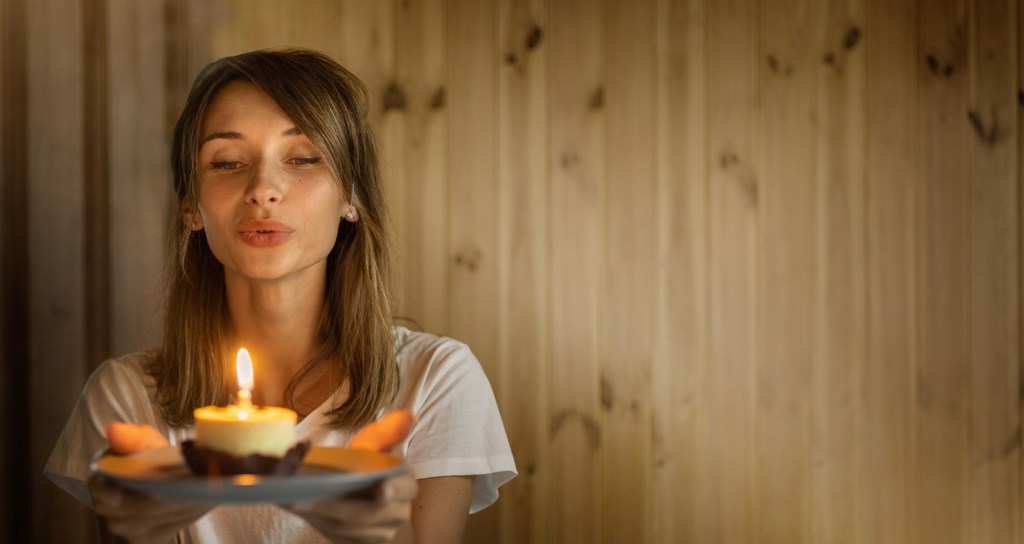
- Slowly exhale through your mouth — pursing your lips slightly, as if softly blowing out your birthday candles.
- Repeat two or three times. Use as and when.
How does it work?
When we feel stressed or anxious, our breathing pattern shifts, becoming faster and more shallow. The location of our breath can shift too, a sense maybe that only our upper lungs are working, high in our chest. And this can further add to our stress. We might become agitated and jittery.
This is because, as our breathing rate quickens, the tiny air sacs in our lungs begin to deflate. Carbon dioxide builds up in our bloodstream, knocking our system out of balance.
The ‘physiological sigh’ works, says Andrew Huberman, ‘by re-inflating the sacs in our lungs and the longer exhale rapidly offloads excess carbon dioxide, providing an immediate sense of increased calm. Additionally, our heart rate declines and oxygen levels go up, contributing to a greater sense of calmness.’
Breathing with benefits
It’s something our bodies do naturally — often when we’re asleep — outside of our awareness. I’ve also observed it as I’ve been coaching breathing, where we might be using a recorded breath sound to guide us towards an even in breath and out breath, so-called ‘resonance breathing’. That double breath in gives our lungs an extra push to fully inflate, before slowly letting it go — getting us back to our regular rhythm. Balancing the amount of carbon dioxide and oxygen in our system helps restore our body to equilibrium and calm.
But we don’t need to be asleep or deep inside a meditative practice to harness the benefits. We can use it at will, whenever life knocks us off-balance, because the physiological sigh consciously engages our parasympathetic nervous system — the ‘rest and digest’ element of our autonomic nervous system — with that long slow exhale helping deactivate the ‘fight-or-flight’ response, literally calming our nerves. Better still, it helps restore a sense of control.
‘Understanding and harnessing the power of deep, intentional breaths, especially physiological sighs, can be a valuable tool in our quest for stress reduction and emotional regulation,’ says Huberman. ‘By integrating these insights into our daily lives, we can take proactive steps toward better health and greater emotional resilience’.
Take back control
Research published in January 2023, suggests that the physiological sigh is more effective than ‘passively attending to the presence of one’s breath during mindfulness meditation’, precisely because it provides ‘a sense of direct control over one’s physiology’, and that ‘this enhanced sense of control could reduce anxiety quickly as perceived loss of control is a hallmark of anxiety.’
The researchers (which include Huberman) found that ‘cyclic sighing produced the highest daily improvement in positive affect as well as the highest reduction of respiratory rate, both significantly different from mindfulness meditation’. And, they suggest, the effect lasts longer too.
This is by no means an argument on my part to drop our more focused breathing and relaxation sessions — but sometimes we just need something in our ‘toolkit’, outside of class. Outside of a more structured practice. Something we can call on right now, in the moment, in our everyday life. And this just might be it.
So next time you’re caught in traffic, or held up in a queue for the till… next time life deals yet another tiny ‘cut’ to your general sense of wellbeing… next time you sense yourself breathing high and fast in your chest… next time you feel het-up or anxious… about anything… give it a go. It’s just a few moments in time. What’s not to love?
 YogaJoodleDo